Looking after your employees means supporting their financial wellbeing when life happens. It’s an employee benefit that has seen tremendous growth, with nearly one in four employers now making it a feature of their compensation plans.
Group income protection provides a safety net for your employees when they cannot work because of illness or injury. Many such policies even provide direct rehabilitation and mental health support along the way.
At Dragonfly Crowd, we can help organise your policy as your insurance intermediary by analysing a wide panel of insurers to get the package that’s right for your team. Here’s what you must know about these policies.
What is group income protection?
Group income protection replaces a portion of your employee’s income when a qualifying illness or injury stops them from coming into work. Instead of a lump sum, it pays a monthly benefit once the claim is approved.
By providing regular monthly income, it gives employees peace of mind that they are financially covered while they focus on recovery. An increasing number of policies offer additional benefits, such as targeted rehabilitation support.
How does group income protection work?
Group income protection is relatively easy to understand. The process begins by selecting the policy that best suits your needs, factoring in:
The number of employees covered.
The benefits offered by the policy.
The waiting period before payments kick in.
If a covered employee can’t work because of injury or illness, you’ll lodge a claim with your insurer. Assuming they qualify and the waiting period has elapsed, payments will be made directly to the employer and passed to the employee via company payroll.
Note that group income protection works alongside your defined sick pay benefits, rather than acting as a replacement.
Who pays for group income protection?
Most group income protection policies are employer-funded, so the business is responsible for paying the regular monthly insurance premiums. This enables workers to receive all of the benefits of these schemes without arranging or funding their own policies.
Some businesses opt for employee-funded or salary sacrifice schemes, but these can be significantly more complicated due to changes in how they’re treated for tax reasons.
Who is covered by a group income protection policy?
Eligibility rules depend on the policy in question. You’ll discuss the eligibility rules with your insurer. A policy might cover the entire workforce or split it into groups of employees. For example, you may opt only to offer benefits to full-time employees.
How much of an employee’s salary will income protection pay?
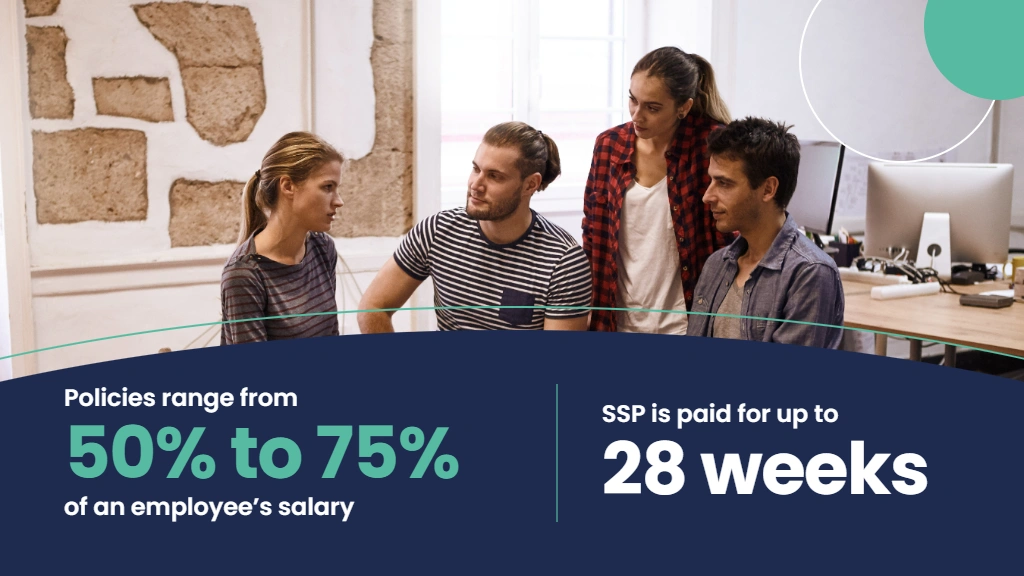
Group income protection is primarily designed to cover a portion of an employee’s salary, rather than act as a pound-for-pound replacement. Typically, policies range from 50% to 75% of an employee’s salary, but the actual level depends on what options your insurer offers.
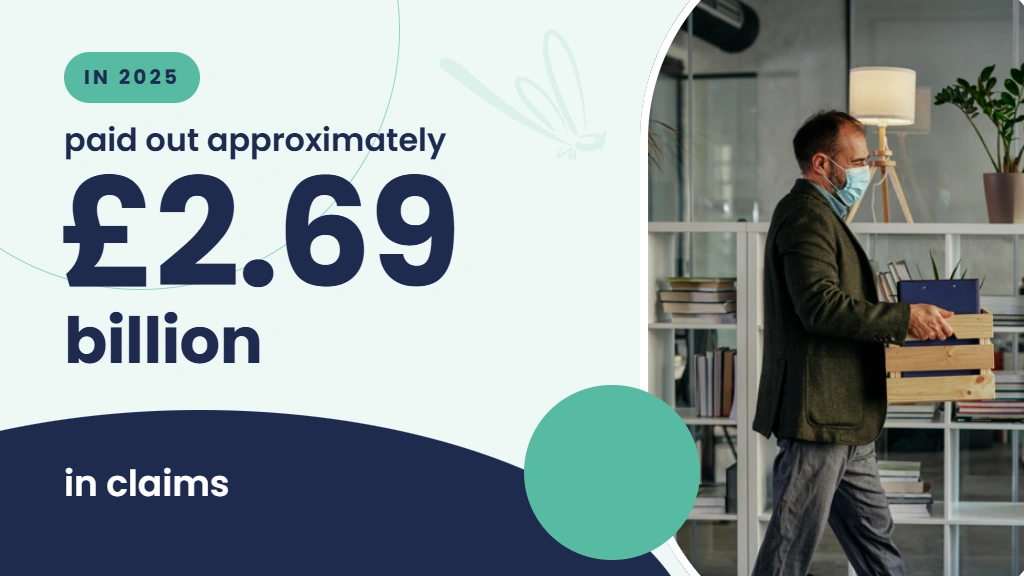
In 2025, group income protection paid out approximately £2.69 billion in claims, indicating just how commonplace this workplace benefit is becoming.
How long are the benefits paid for?
Benefit durations depend on the policy you select. Some policies have a defined payout period, while others offer longer-term cover.
Typically, benefits are paid until the defined period ends or until an employee has recovered to return to work.
What support does it give beyond the monthly payment?
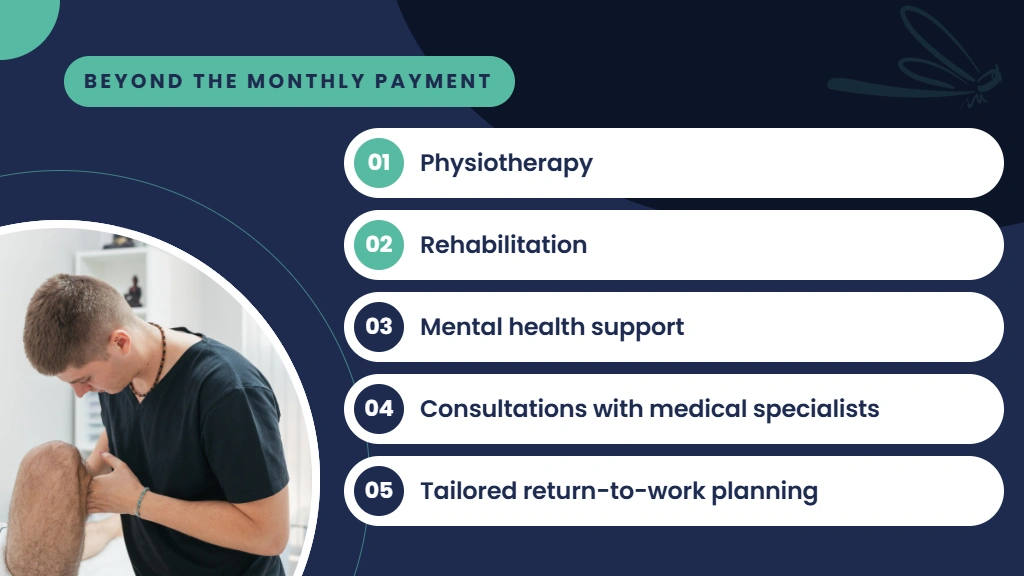
Group income protection policies have evolved to do more than provide regular payments to employees who’re too unwell to come into work. Providers offer a range of benefits to support health and well-being, including:
Physiotherapy
Rehabilitation
Mental health support
Consultations with medical specialists
Tailored return-to-work planning
These benefits go beyond simple financial support by showing your workers they’re supported on the long road to recovery. It’s both an advantage for doing what’s right for your team and makes your company a more attractive place to work in the first place.
How is income protection different from Statutory Sick Pay (SSP)?
SSP is the minimum amount every employer must pay to eligible employees if they cannot come into work. Under current rules, it’s paid for up to 28 weeks, but many companies offer more through defined sick pay schemes.
Group income protection isn’t designed to be a replacement for SSP but a way to complement it. In many cases, it can even last much longer than standard SSP, ensuring that long-term illnesses and injuries are properly cared for. Plus, it may offer extra benefits that can kick in even before the defined waiting period has elapsed.
How is group income protection different from an individual policy?
At first glance, group income protection and their individual equivalents can seem remarkably similar. Whilst there’s significant crossover, there are differences. The two differences are primarily:
Individual policies are set up by the beneficiary themselves.
Group policies are arranged by employers for their workforces.
Personally arranged individual income protection payments are generally tax-free, whereas those same payments via employer-funded programs are normally taxed as ordinary employment income. If any of your employees already have individual income policies, it’s worth speaking to an expert to see how your group policy and their individual policy might interact.
Why do employers offer group income protection?
Group income protection is a way to show that you care for your people. It reassures employees that they won’t have to worry about paying the bills if they can’t work because they’re injured or fall ill.
From an employer perspective, it’s a way to strengthen your benefits package. It’s yet another way to make your company more attractive to work for. This can support you in recruiting and retaining the top talent that could help you write the next chapter in your growth story.
Additionally, this isn’t just a benefit that supports larger companies but also smaller teams.
Is group income protection a taxable benefit?
Employer-funded cover itself doesn’t add any extra tax burden for your employees. The income payments themselves, though, are taxed just like ordinary employment income. This situation can change if you’re running an employee-funded program or salary sacrifice is involved.
That’s why it’s vital to speak to an insurance intermediary and your accounting team to help your team understand their tax positions.
How to set up a group income protection scheme
Begin by reviewing your workforce, your budget, and your existing company sick pay scheme, if you have one beyond ordinary SSP. Consider who you’d like to cover, an appropriate benefit level, and the waiting period.
We know that this can be challenging to work through, which is why Dragonfly Crowd is here to help. Our personalised process involves taking the time to understand your company and your people before searching a wide panel of insurers to source the policy that’s right for you.
Staff can’t get income protection individually due to their medical history? Group income protection offers another option. See how underwriting differs.
Group critical illness cover is there to provide employees with a lump sum payout entirely […]
Subscribe to our mailing list to stay up to date on the latest news from Dragonfly Crowd
By submitting your email address you are consenting to receive marketing information from Dragonfly Crowd
We'll Call You Back
Simply provide us with your information, and we'll promptly get in touch (typically within 24 hours on weekdays) to discuss your health insurance requirements. Afterward, we'll follow up with your complimentary quote (usually within a week).